Alive Again
When Nadine began to feel ill, she feared the worst. She’d seen what Ebola does and watching someone die with the disease was a pain “impossible to bear.”
Nadine was admitted to our Bunia treatment centre and now is thanking God to be returning home after 15 days of care.
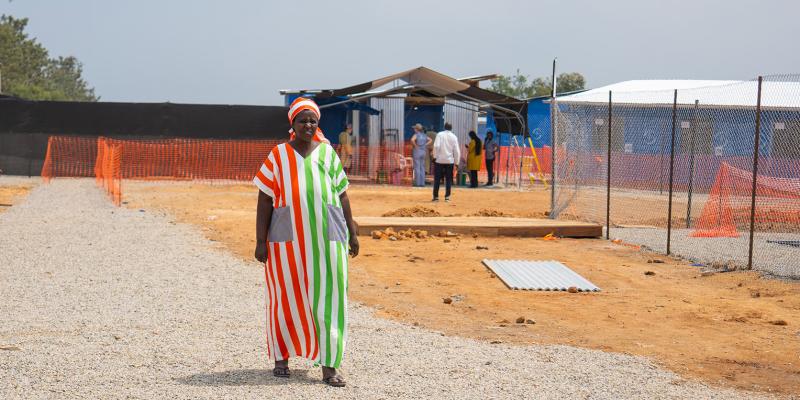
Nadine came to the treatment centre in Bunia with fever, headaches, and all the other symptoms of early Ebola illness.
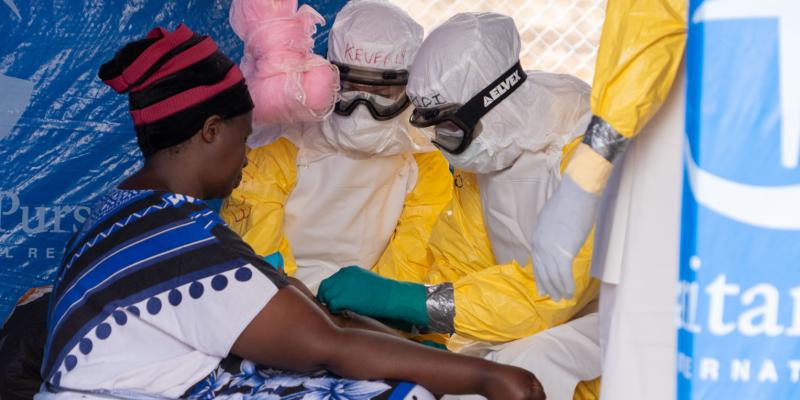
She was brought to the Samaritan’s Purse clinic in Bunia early in her illness, which was good. Soon her fever spiked. She could not eat. She felt weak and exhausted. Our medical team was there by her side to help.
Doctors and nurses administered treatments and IVs of fluid to keep her vital signs out of the danger zone. They also encouraged her verbally in the midst of the worst of the illness.
“The doctor personally attended to my IV. What hospital would do that?” she said in grateful astonishment.
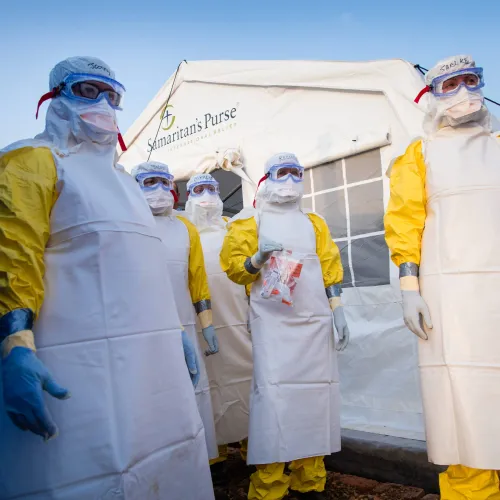
Since June we’ve treated more than 500 patients like Nadine at our Ebola Treatment Centre in Bunia, the capital of Ituri Province, and at a long-time partner mission hospital in Nyankunde. There are thousands of confirmed cases of the disease in the region.
“The nurses would wash me, then carry me and lay me down, and cover me. We went through weakness and exhaustion, but Samaritan’s Purse walked hand in hand with us and did not neglect a single patient,” Nadine said.
For 15 days, she lay in the treatment centre room, at times unaware of what was happening, at times wondering if she would ever leave alive. At the height of her illness, she still wondered if she would be numbered among those who did not survive.
Doctors and nurses attended to Nadine day and night.

The nurses would come, encouraging her to “eat a little.” Pastors would pray with her from outside the hot zone. Chaplains would counsel her from a distance.
“There were very many pastors. Too many to count,” she said. “Not one was absent. Twenty-four hours a day, the pastors were there. Even at night, pastors were there.”
So many people in her village, Kiwangwa, were slow to get care after the symptoms started. She knew that if she had waited any longer to seek treatment, as many people in her village had done, she likely would have lost her life as well.
“At night,” Nadine said of her hospitalisation, “you would hear that they were carrying out someone who had died.” Responsible fathers and orphaned children were among those they lost.
She said she still grieves the losses that she’s witnessed and heard about in her country.
“Ignorance is what kills people. A person who refuses to accept that Ebola exists will delay. People remain at home for too long,” she said. “If you come as soon as you feel sick, you can live. All the medicine that brought us back to life is here.”
Finally, Nadine began to eat again, three meals a day, and she remembers feeling that she was coming back to life.
The day that Nadine walked out of the treatment centre—Ebola-free—she was praising God.
“May God bless that hospital. Whoever enters there, may that person recover as we have recovered, and may that person testify as we are testifying,” she said. “Today is the day God in Heaven has allowed us to leave, and we are going home to Kiwangwa. The first thing is to thank God, who gives us life and breath. We return all glory and honour to him!”
We thank God for the opportunity to care for suffering patients in Jesus’ Name and for the many people, including Nadine, who have recovered from Ebola at our treatment centre. We praise God for both physical and spiritual healing, as several people have given their lives to the Lord Jesus Christ through the ministry of our staff, chaplains, and partner pastors.
When Nadine was free of symptoms and released to go home, our staff gathered to celebrate her recovery.

Support Ebola Response
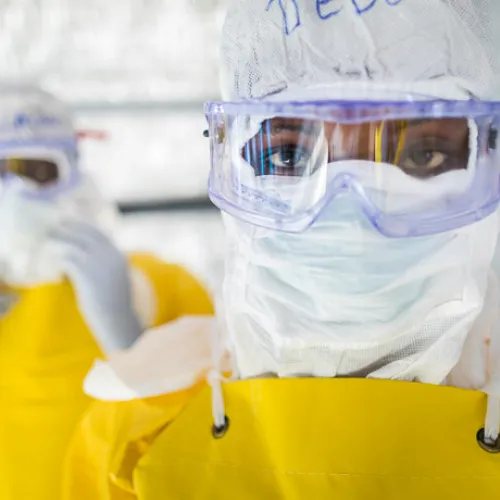
£10 can help get urgently needed PPE into the hands of those containing the outbreak on the frontlines.
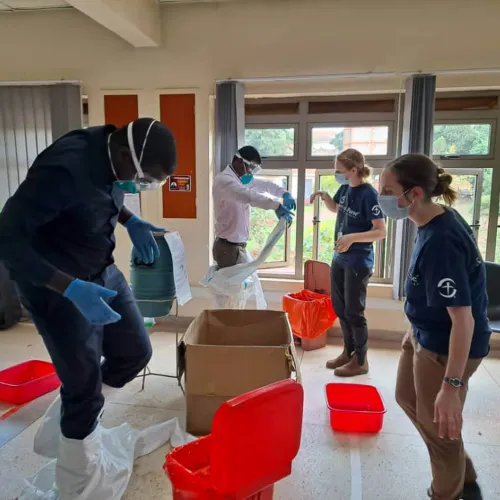
£50 could provide clean water and sanitation stations to help stop the spread of this deadly virus.
£100 supports our Ebola Treatment Centre in giving hands-on care for infected men, women, and children.